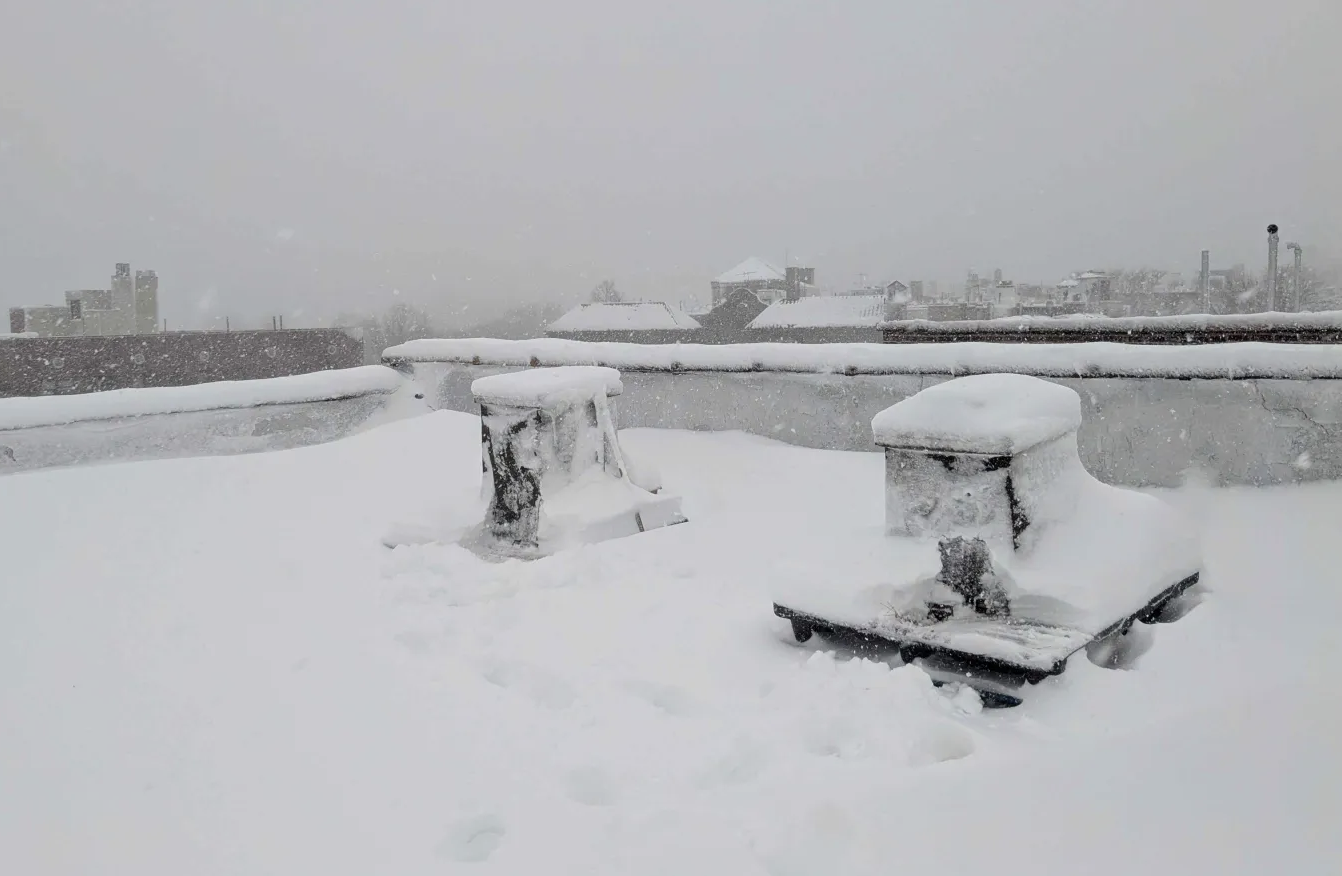
Photo of the hives in a recent snowstorm taken by Anne Schoeneborn
It’s March 2026 — almost seven years since our last post on this blog. You could say we’ve been in a long hibernation. So what better topic to revive this blog with than the winter? Specifically, what do bees actually do all winter?
I should say that I am a relatively new addition to the Q Gardens Bee crew. I attended my first hive check in 2024 because I lived in the area and was making an art project about the relationship between honeybees and spotted lantern-flies and realized I knew more about the SLF than the honeybees. I thought I would attend just one or two hive checks especially because I am allergic to bees and had a slight phobia. But I very quickly fell in love (with both the bees and the people) and am happy to be here as a bee team coord ~two years later.
I say this because as a newbee I often have moments where I think to myself how did I not know this before? Or perhaps more accurately, why did I never think about this before? Understanding what bees do in the wintertime falls under that category.
Bees do not hibernate or migrate. They instead form a cluster around their queen and “shiver” to generate heat. The bees on the outermost edges of the cluster are more densely spaced to prevent heat from escaping, allowing the center of the cluster, nearest the queen to maintain a temperature of around 90 degrees F.
On the rare winter day when the temperature gets above 50 degrees F, the bees will leave the hive to take ‘cleansing flight’ — which I found out is a very cute euphemism for a bathroom run💩!
But creating this cluster/bee-furnace takes a lot of energy and so its really important that the bees have enough of a food source to last them the winter. Normally, their honey stores can act as their primary food source but if honey stores are kind of low in the fall, we also like to give them some backup food in the form of white sugar (as an aside — we don’t use brown sugar because the molasses content causes severe dysentery for the bees). This past November, we ‘winterized’ the bees by lining the outer edges of the hives with black tar paper for warmth and following the mountain camp method for adding sugar.
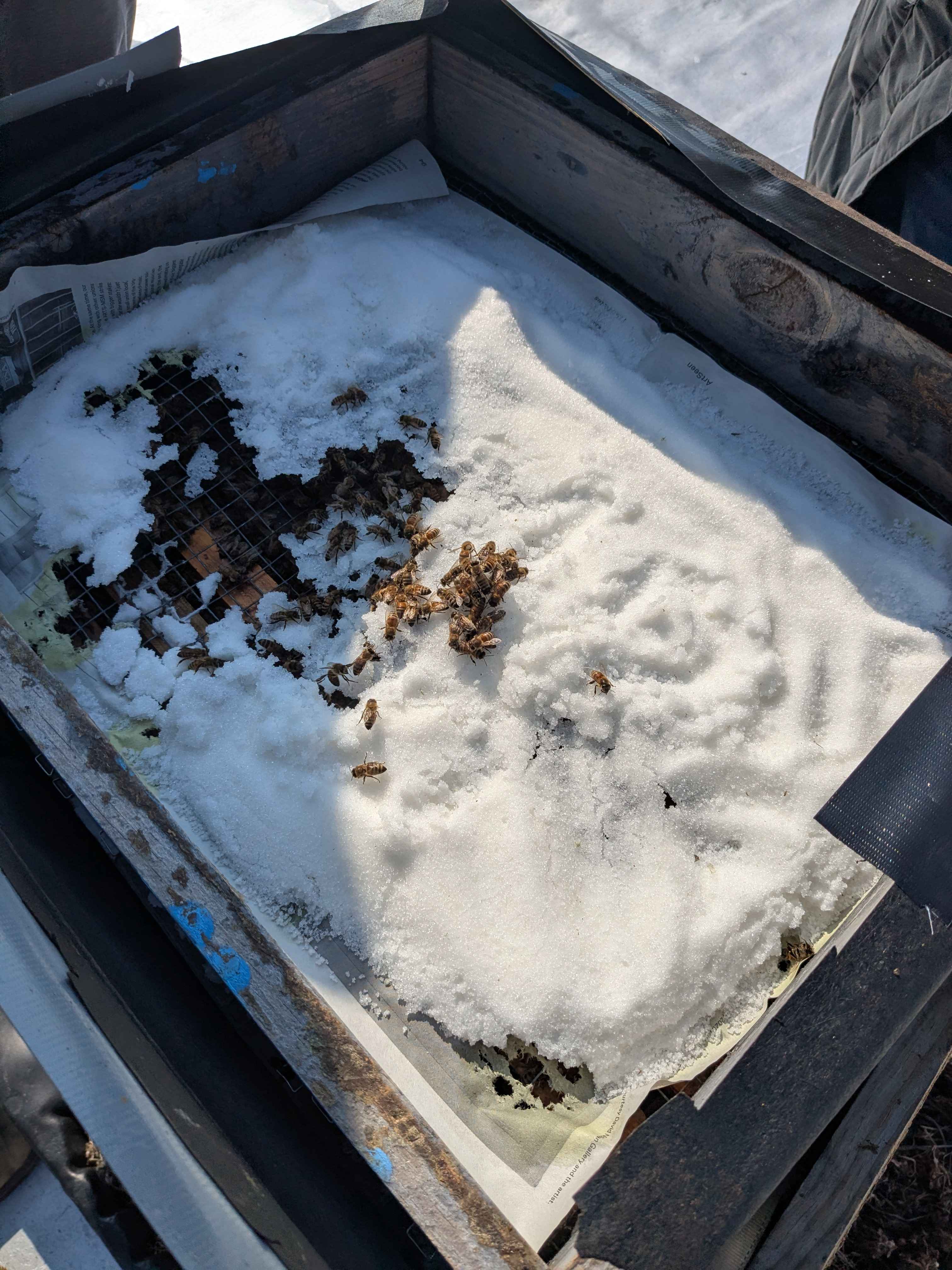
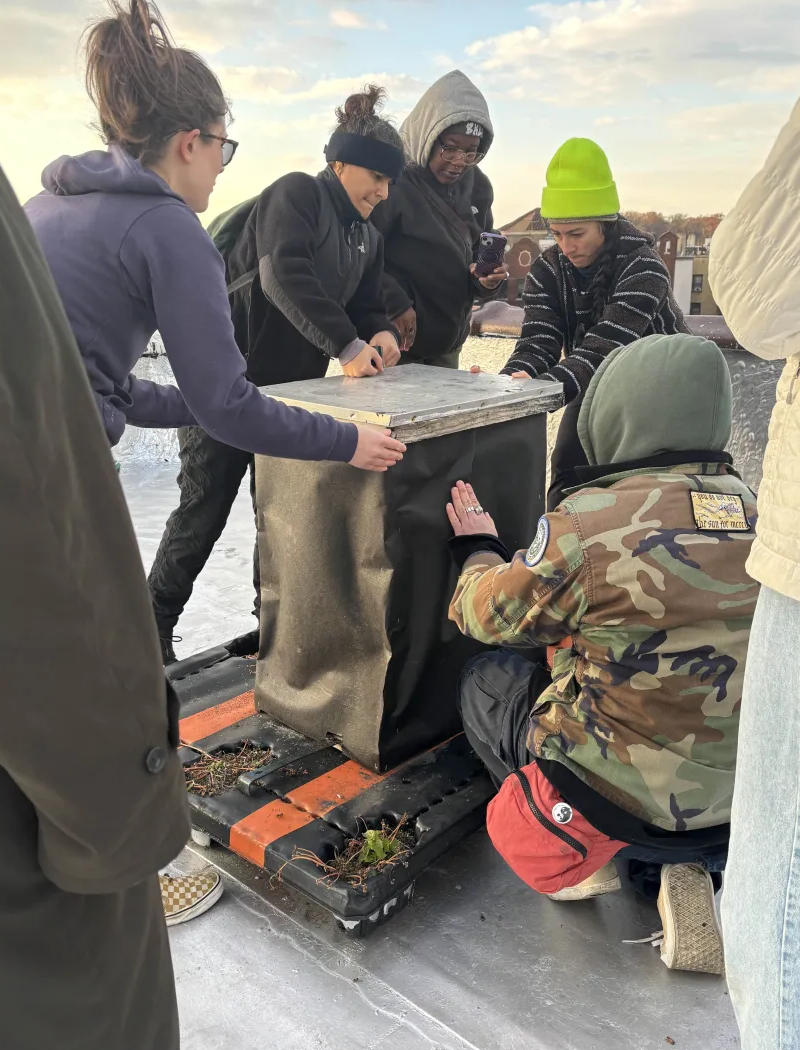
For the mountain camp method, we put newspaper over the top frames and cover it with white sugar. The bees can eat through the newspaper and then eat the sugar as needed throughout the winter. As an added bonus, the sugar will absorb the condensation created from the shivering bees warmth, preventing moisture from disrupting the hive and making the sugar a nice kind of semi-hardened consistency for the bees to nosh.
A few of us including myself, were particularly worried about the bees during some intense snow storms we received this year. But I actually found out (after sifting through some Canadian beekeeping forums) that snow can help in the sense that it insulates the hive. A bee igloo of sorts…
But another question this winter has brought up for us is how the increasingly erratic weather and ongoing effects of climate change might be disrupting the bees winter routines. I found this paper that brings up the good point that “since mites can immigrate into colonies whenever foraging weather occurs, warm fall temperatures late into the season extend the period of mite migration.” So from my understanding, increasingly warm weather towards the fall can mean it’s more difficult to keep those mite populations down prior to overwintering. Another risk the paper highlights is that warm fall temperatures can leave overwintering colonies with a dangerously aged population — since bees fly more in the warmth and flight activity physiologically ages them, colonies heading into winter may already be too old to recover when spring arrives.
But so far, we are in the clear. We opened our hives for the first time this year Mar 14th and the bees seem to be doing OK 🙂 We saw eggs and uncapped/capped brood in both hives.
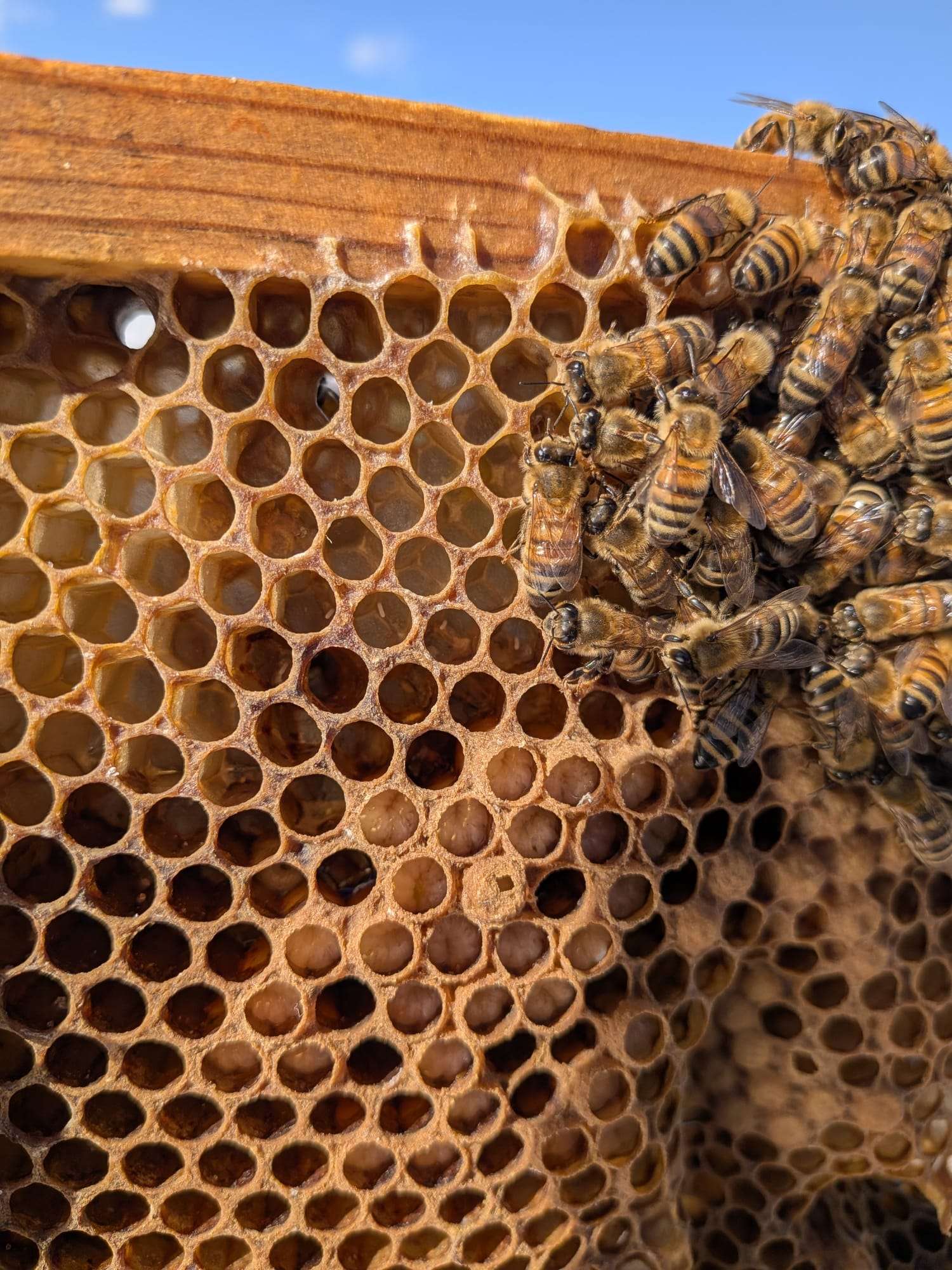
Photo by Iñaki
We hope to be writing more frequently here as the spring rolls in.
— Aarati Akkapeddi
 Q Gardens